Vienna isn’t just about Mozart, grand palaces, and coffee houses that feel like time capsules—it’s also one of Europe’s great food cities. The Austrian capital blends hearty, comforting dishes rooted in imperial history with influences from neighboring regions like Hungary, Bohemia, and Italy. Walking the streets, you catch whiffs of frying schnitzel, simmering goulash, and fresh-baked strudel that make your stomach growl instantly.
I’ve visited Vienna multiple times, and each trip feels like a reminder that food here is about quality ingredients, simple preparation, and sharing a meal that warms you from the inside. Whether you’re dodging tourists on Stephansplatz or wandering quieter neighborhoods like the 7th district, these dishes capture the soul of Viennese cuisine. Here’s my list of 20 must-try dishes in Vienna, with details on what makes them special, where to find the real deal, and a few personal stories to bring them to life.
1. Wiener Schnitzel
This thin, breaded veal cutlet—fried to golden perfection—is Austria’s national dish and the first thing most people think of when planning a Vienna trip.
It’s pounded thin, coated in flour, egg, and breadcrumbs (no cheese or tomato sauce like Italian versions), then fried in butter or lard for that signature crisp. Served with lemon wedge, potato salad, and sometimes lingonberry jam.
Figlmüller on Wollzeile is legendary for its oversized version, but lines are long—try Schnitzelwirt or Skopik & Lohn for excellent alternatives without the wait. I once devoured one at a small Beisl after a long day, and the crunch still haunts me in the best way.
2. Tafelspitz
Boiled beef brisket simmered with root vegetables, herbs, and spices—Emperor Franz Joseph’s favorite, hence its regal status.
Served sliced with the cooking broth, horseradish sauces (apple and chive varieties), creamed spinach, and roasted potatoes. It’s subtle yet deeply satisfying, perfect for cooler days.
Plachutta is the go-to spot; they present it in copper pots tableside. On my first visit, I expected something fancy, but it’s humble home cooking elevated—pure comfort.
3. Apfelstrudel (Apple Strudel)
Flaky, paper-thin pastry wrapped around spiced apples, raisins, and breadcrumbs—often dusted with powdered sugar and served warm with vanilla sauce or ice cream.
The dough is stretched by hand until translucent. It’s lighter than you expect, with a perfect balance of tart apple and sweet cinnamon.
Café Demel or Café Central do classics, but many coffee houses offer fresh versions. I shared one at a tiny spot near Naschmarkt, and the warmth paired with strong coffee felt like pure Vienna magic.
4. Sachertorte
Dense chocolate cake layered with apricot jam, coated in glossy dark chocolate—Vienna’s most famous dessert, created in 1832.
Served with unsweetened whipped cream to cut the richness. The original is at Hotel Sacher, but Café Demel claims a rival version.
The debate over “original” adds fun—try both if you can. It’s rich, so share a slice; I learned that the hard way after ordering one solo.
5. Kaiserschmarrn
Shredded sweet pancake with raisins, caramelized sugar, and often rum-soaked fruit—named after Emperor Franz Joseph (“Kaiser’s mess”).
Dusted with powdered sugar, served with plum compote or applesauce. It’s fluffy, buttery, and addictive.
Café Central or traditional Gasthäuser nail it. I had it for “lunch” once—felt like cheating, but zero regrets.
6. Wiener Würstel (Vienna Sausages)
Boiled or smoked pork-beef sausages, often called Frankfurter in Austria—street food royalty.
Served in a bun with mustard, horseradish, or ketchup from Würstelstands.
Grab one at Bitzinger near Albertina—late-night perfection after opera or sightseeing.
7. Käsekrainer
Cheese-filled sausage, grilled or boiled—oozy mozzarella-like cheese inside when hot.
Topped with mustard and bread. Popular at sausage stands.
It’s messy and glorious—perfect fuel for walking tours.
8. Frittatensuppe
Clear beef broth with thin pancake strips (Frittaten)—comfort in a bowl.
Simple yet elegant starter in many Gasthäuser.
Warm and nourishing, especially in winter.
9. Viennese Goulash (Wiener Saftgulasch)
Rich beef stew with paprika, onions, and caraway—no potatoes or veggies like Hungarian versions.
Thick, saucy, often with bread or dumplings.
Hearty and flavorful—ideal for cold evenings.
10. Leberkäse
Baked meatloaf of pork, beef, and bacon—sliced thick, often in a roll with mustard.
Semmelroll with sweet mustard is classic street food.
Surprisingly tasty despite the name (“liver cheese” has no liver).
11. Erdäpfelsalat (Potato Salad)
Vinegar-based with onions, mustard, broth—no mayo like American versions.
Served warm or cold alongside schnitzel.
Bright and tangy—cuts through richness perfectly.
12. Palatschinken
Thin crepes, sweet or savory—often filled with jam, curd cheese, or meat.
Topfenpalatschinken (curd cheese) is a favorite.
Versatile and delicious any time.
13. Knödel (Dumplings)
Bread, potato, or cheese varieties—served as side or main.
Semmelknödel soaks up sauces beautifully.
Comfort food at its finest.
14. Beuschel
Offal stew (lungs, heart) in creamy sauce—traditional and bold.
Served with dumplings. Adventurous eaters love it.
Not for everyone, but authentic.
15. Zwiebelrostbraten
Roast beef with crispy onions—juicy, flavorful.
Often with gravy and potatoes.
Steakhouse vibes with Austrian twist.
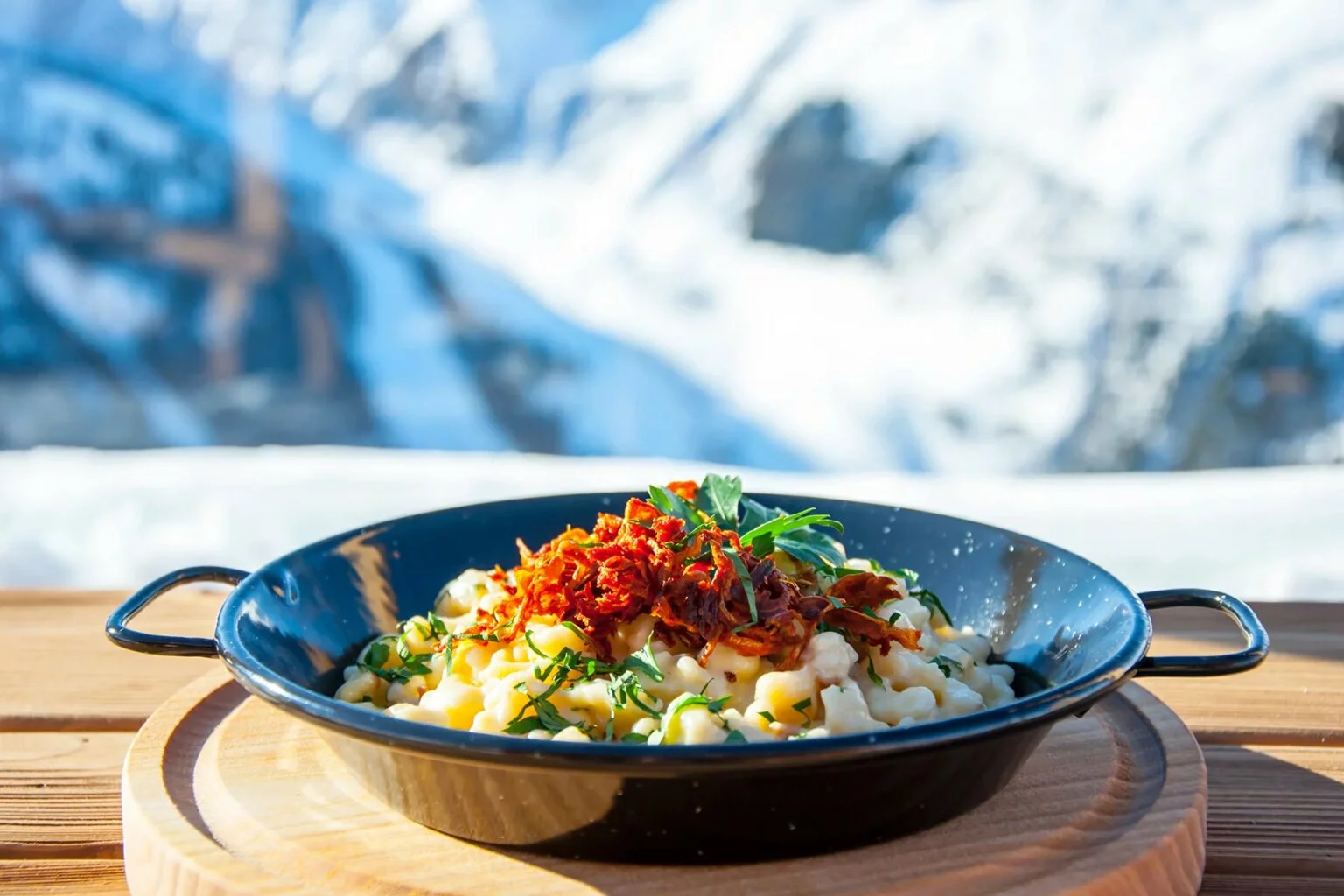
16. Käsespätzle
Cheesy egg noodles—Austria’s answer to mac and cheese.
Baked with onions—gooey and comforting.
Vegetarian highlight.
17. Schweinsbraten (Roast Pork)
Crispy crackling pork with dumplings and sauerkraut.
Hearty Sunday roast style.
18. Powidltascherl
Plum jam-filled dumplings—sweet, boiled or fried.
Dusted with sugar—dessert gem.
19. Marillenknödel
Apricot dumplings—whole fruit encased in potato dough.
Seasonal and delightful.
20. Melange (Viennese Coffee)
Espresso with steamed milk and foam—not quite cappuccino.
Paired with any pastry in a classic café.
The ritual of coffee house culture ties everything together.
Comparison: Classic vs. Modern Takes
- Wiener Schnitzel — Traditional veal at Figlmüller; pork versions more common today (cheaper, still tasty).
- Desserts — Sachertorte is dense and chocolatey; Apfelstrudel lighter and fruit-forward.
- Street Food — Würstelstands quick and cheap; sit-down Beisls offer full meals with atmosphere.
Pros of Viennese dining: Fresh, seasonal ingredients; cozy settings; portion sizes generous.
Cons: Can be heavy; tourist spots pricey; vegetarian options limited but improving.
People Also Ask (PAA)
What is the most famous food in Vienna?
Wiener Schnitzel tops the list, followed closely by Sachertorte and Apfelstrudel.
What is Austria’s national dish?
Officially Tafelspitz, though Wiener Schnitzel is more globally recognized.
Where to eat authentic Wiener Schnitzel in Vienna?
Figlmüller, Schnitzelwirt, or Plachutta—look for veal for the classic.
Is Viennese food heavy?
Yes, many dishes are meaty and fried, but soups, salads, and lighter pastries balance it.
Best time to try Austrian desserts?
Anytime, but coffee houses shine in afternoons for strudel or torte with Melange.
FAQ
Is Wiener Schnitzel always veal?
Traditionally yes, but pork is common and accepted—ask for “vom Kalb” for veal.
Where can I find the original Sachertorte?
Hotel Sacher holds the trademark; their café serves it with the official seal.
Are there vegetarian options in traditional Viennese cuisine?
Yes—Käsespätzle, Palatschinken with jam, or Erdäpfelsalat; many places adapt dishes.
How much should I budget for a meal?
Casual Beisl: €15–25 per person; famous spots like Figlmüller: €20–35; desserts/coffee: €5–10.
What’s the coffee house etiquette?
Linger as long as you like—one drink buys your table for hours; it’s about the atmosphere.
Vienna’s food scene rewards slow exploration. Skip the rush, sit in a smoky café or grab from a Würstelstand, and you’ll understand why this city has fed emperors and artists alike for centuries. Guten Appetit—your taste buds will thank you.