Switzerland’s food scene is one of those delightful surprises that sneaks up on you. Sure, everyone talks about the chocolate and cheese, but the real magic happens when you dig into the hearty, regional dishes shaped by the Alps, lakes, and centuries of cross-border influences from Germany, France, and Italy. I’ve wandered through Zürich’s cozy restaurants, skied into mountain huts for raclette, and even burned my tongue on too-hot fondue in a tiny village in Valais—trust me, these experiences stick with you.
This list of the top 10 foods to try in Switzerland draws from classic staples and regional favorites that locals actually eat and visitors rave about. It’s not just tourist traps; these are the dishes that capture the country’s soul—comforting, flavorful, and often best shared with friends.
1. Cheese Fondue
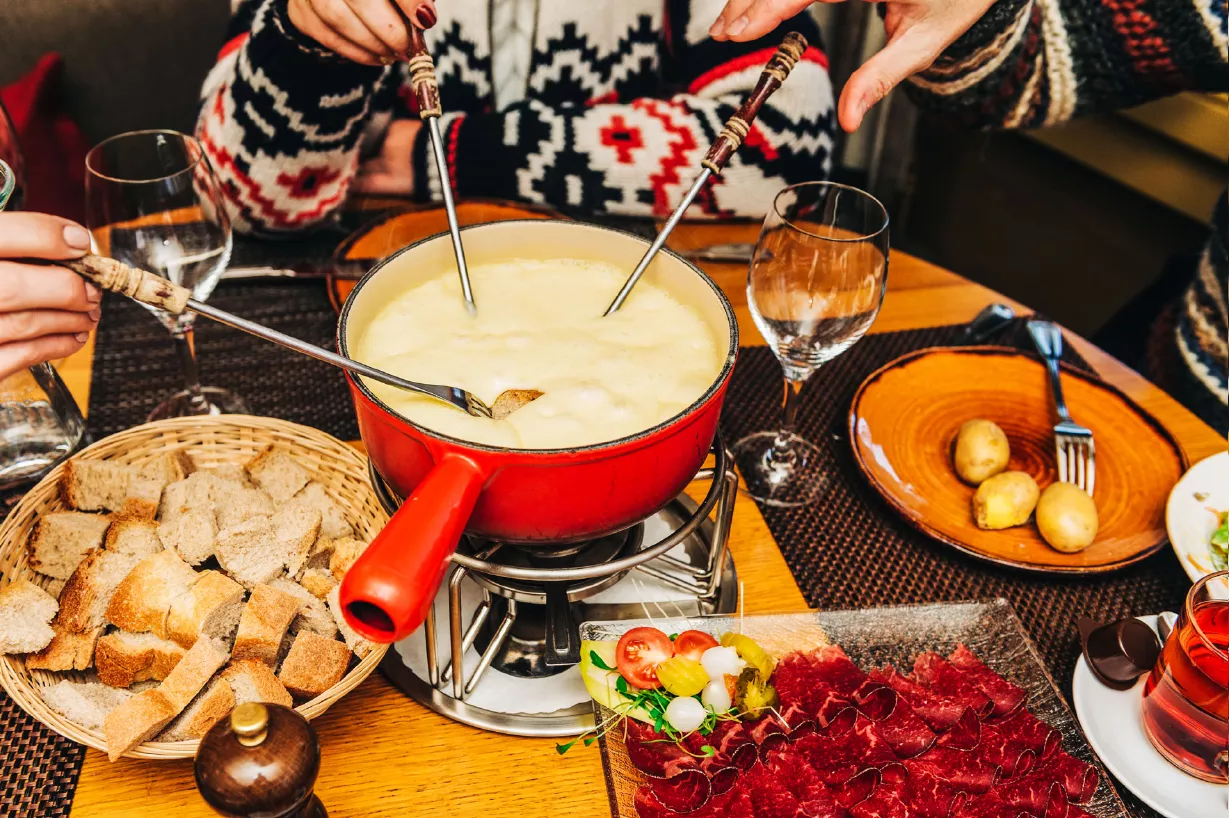
Fondue isn’t just a cliché; it’s a social ritual in Switzerland. A bubbling pot of melted cheese—usually a mix of Gruyère and Emmental, sometimes with Vacherin for extra creaminess—gets flavored with garlic, white wine, and a splash of kirsch. You dip chunks of crusty bread (and sometimes boiled potatoes or pickles) using long forks, and if your bread falls in, tradition says you buy the next round or do a silly forfeit.
I remember my first fondue in Geneva on a chilly evening; the table was lively with laughs every time someone lost their bread. It’s warming from the inside out, perfect after a day outdoors. Look for “moitié-moitié” (half-and-half) versions for the authentic balance.
2. Raclette
Raclette takes melted cheese to a new level of interactivity. A wheel of Raclette cheese is slowly melted by a special heater (or traditionally over an open fire in mountain chalets), then scraped directly onto boiled potatoes, pickled onions, gherkins, and dried meats like Bündnerfleisch.
The beauty is in the sharing—everyone scrapes their own portion, and the nutty, salty flavor pairs perfectly with the crisp potatoes. I had an unforgettable one in a rustic hut near Zermatt; the cheese was so gooey it stretched like mozzarella, and the cold mountain air made every bite feel earned.
3. Rösti
Rösti is Switzerland’s answer to hash browns, but elevated. Grated potatoes are fried into a golden, crispy pancake—sometimes plain, sometimes topped with bacon, cheese, or a fried egg (especially the Bernese version).
Valais-style rösti comes loaded with raclette cheese and tomatoes. It’s crunchy outside, tender inside, and incredibly satisfying. I once ordered it as a side in Bern and ended up making it my main—it’s that good. Perfect for breakfast or as a base for other toppings.
4. Älplermagronen (Alpine Macaroni)
This hearty “herdsman’s macaroni” is pure comfort food from the Alps. Macaroni mixes with cubed potatoes, then smothers in melted cheese (often Gruyère or Appenzeller), cream, and topped with crispy fried onions.
It’s like Swiss mac and cheese with extra soul—simple ingredients from mountain pastures turned into something indulgent. I tried it in a ski resort in Graubünden after a long hike; it hit the spot like nothing else, warming me right to my toes.
5. Zürcher Geschnetzeltes
From Zürich, this creamy veal dish features thin strips of veal (or sometimes pork) sautéed with mushrooms in a white wine and cream sauce, often served with rösti.
It’s elegant yet comforting, showing the German-Swiss side of the cuisine. The sauce is rich but not heavy, and the tender meat melts in your mouth. In Zürich, I paired it with a local white wine—pure bliss on a rainy afternoon.
6. Birchermüesli
Invented by Swiss doctor Maximilian Bircher-Benner in the late 1800s as a healthy breakfast, Birchermüesli is soaked oats mixed with grated apple, nuts, yogurt or milk, and sometimes berries or lemon.
It’s fresh, creamy, and surprisingly filling—far from boring hotel muesli. Every Swiss household has its variation; I love the one with fresh seasonal fruits in summer. It’s a light start to the day that still feels indulgent.
7. Swiss Chocolate
Switzerland produces some of the world’s finest chocolate, thanks to innovations like conching and milk chocolate invention. Brands like Lindt, Toblerone, Cailler, and smaller artisans offer everything from pralines to bars with unique fillings.
Dark, milk, white—try them all. I once toured a factory in Broc and came away with way too many samples; the smooth texture and balanced sweetness are unmatched.
8. Papet Vaudois
A classic from the Vaud region: leeks and potatoes stewed slowly until soft, then topped with sausage (often saucisson vaudois or liver sausage).
It’s humble but deeply flavorful—the leeks add sweetness, potatoes give body, and the sausage brings smokiness. Paired with mustard, it’s a cozy winter dish I discovered in Lausanne and still crave.
9. Capuns
From Graubünden, capuns are little bundles of chard leaves wrapped around a dough of flour, eggs, and dried meats or bacon, then simmered in stock.
They taste like a cross between dumplings and stuffed cabbage—savory, herby, and unique. I first tried them in a family-run place in the Engadine; they felt like a secret only locals knew.
10. Bündnerfleisch (or Other Dried Meats)
Air-dried beef from Graubünden, thinly sliced—intensely flavorful, salty, and tender. Similar to Italian bresaola but distinctly Swiss.
It’s often served as an appetizer with bread or in raclette. The curing process in mountain air gives it a special depth. Pair it with a glass of local red wine for the full experience.
Comparison of Iconic Cheese Dishes
| Dish | Main Cheese(s) | How It’s Served | Best For | Regional Origin |
|---|---|---|---|---|
| Fondue | Gruyère + Emmental | Communal pot, dip bread | Groups, winter evenings | Nationwide |
| Raclette | Raclette | Scraped from wheel onto plates | Interactive meals | Valais, mountains |
| Älplermagronen | Gruyère/Appenzeller | Baked or mixed with pasta/potatoes | Comfort after hiking | Alps |
Pros and Cons of Trying Swiss Cheesy Classics
Pros:
- Incredibly satisfying and warming in cold weather
- Social and fun to share
- High-quality, grass-fed dairy shines through
- Versatile—vegetarian options available
Cons:
- Very rich; can feel heavy if overindulged
- Not ideal for lactose-intolerant without alternatives
- Calorie-dense—save room!
People Also Ask (PAA)
What is the national dish of Switzerland?
Fondue and raclette often share the title, but fondue appears most on official lists like Switzerland Tourism’s site.
Is fondue really Swiss?
Yes—originated in the 18th century as a way to use stale bread and cheese in winter. It’s a Swiss invention, even if similar melted cheese dishes exist elsewhere.
What is the most famous Swiss food?
Cheese fondue and Swiss chocolate top the list, but rösti and raclette are close behind for savory lovers.
What do Swiss people eat for breakfast?
Often bread with butter, jam, or cheese; muesli or Birchermüesli; coffee or hot chocolate.
Is Swiss food healthy?
It varies—lots of dairy and meat, but fresh alpine ingredients, good cheeses, and lighter options like muesli balance it out.
FAQ
What are the must-try foods in Switzerland besides fondue and raclette?
Rösti, Älplermagronen, Zürcher Geschnetzeltes, Birchermüesli, and regional specialties like capuns or Bündnerfleisch offer variety beyond the cheese-heavy classics.
Where can I try authentic Swiss food?
Mountain huts for raclette and fondue, local restaurants in cities like Zürich or Geneva, or markets for chocolate and dried meats. Avoid tourist traps near major landmarks—ask locals for recommendations.
Is Swiss cuisine vegetarian-friendly?
Yes, increasingly so. Fondue can be made vegetarian, rösti often is, and dishes like Birchermüesli or cheese-focused ones work well. Many places offer veg adaptations.
What drinks pair best with Swiss food?
Local wines (white from Vaud or Valais), beer, or fendant (a light white). For fondue, kirsch or herbal tea helps digestion.
How much should I budget for food in Switzerland?
Meals range from 20-50 CHF per person in casual spots to higher in nice restaurants. Street food or supermarket picnics keep costs down.
Switzerland’s food tells the story of its people—practical, resourceful, and deeply tied to the land. From the communal warmth of fondue to the simple joy of fresh chocolate, each bite feels earned. Next time you’re there, skip the obvious and hunt for regional twists; your taste buds (and probably your waistline) will thank you. Bon appétit—or as the Swiss say, en Guete!